5 Cold Cases Where Victims Finally Got Their Names Back
True crime stories often focus on suspects, clues, and investigations. But in some cold cases, the most important breakthrough is simpler and more human: finally learning the victim’s name.
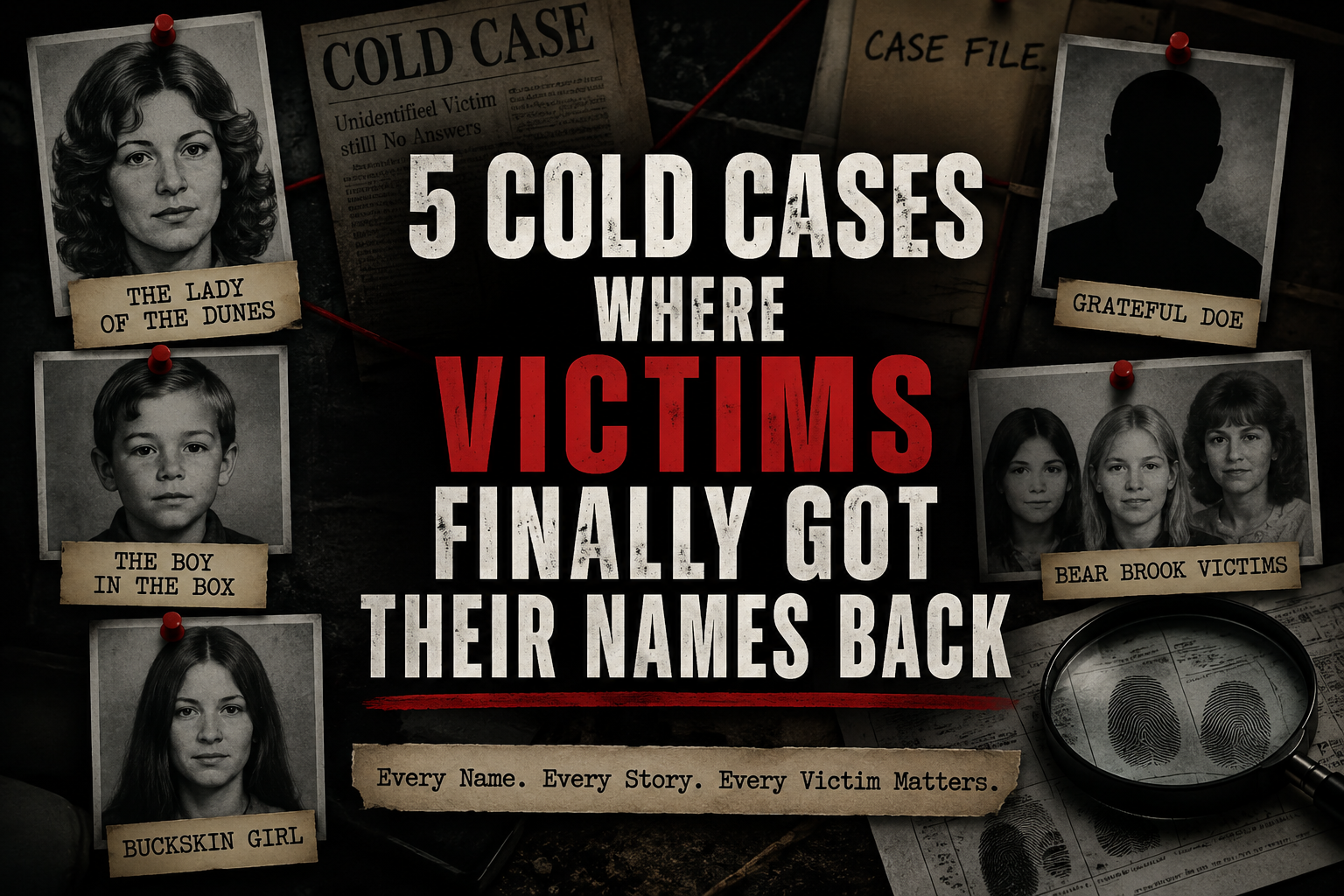
For years, some people were known only by nicknames given by investigators, reporters, or the public. They were called things like “The Lady of the Dunes,” “The Boy in the Box,” or “Grateful Doe.”
Those names helped people remember the cases, but they were never the real names of the people who lost their lives.
Thanks to DNA testing, genetic genealogy, public tips, and investigators who refused to give up, several long-unidentified victims have finally been identified.
These victims were never just mysteries. They were people. And getting their names back matters.
Here are five cold cases where victims finally got their names back.
At a Glance
These cases include:
- Ruth Marie Terry, once known as “The Lady of the Dunes”
- Joseph Augustus Zarelli, once known as “The Boy in the Box”
- Marcia L. King, once known as “Buckskin Girl”
- Jason Callahan, once known as “Grateful Doe”
- Marlyse Honeychurch, Marie Vaughn, Sarah McWaters, and Rea Rasmussen, victims in the Bear Brook case
1. “The Lady of the Dunes” — Ruth Marie Terry
For nearly 50 years, one of Massachusetts’ most haunting unidentified victim cases was known as “The Lady of the Dunes.”
Her body was found in Provincetown, Massachusetts, in 1974. For decades, investigators tried to identify her through missing-person reports, facial reconstructions, and other methods, but her real name remained unknown.
That changed in 2022, when investigators announced that she had been identified as Ruth Marie Terry.
The breakthrough came through investigative genealogy, a method that uses DNA and family-tree research to generate new leads.
After almost half a century, Ruth was no longer just a nickname connected to a case file.
She was a real person with a real name, and a family who could finally receive answers.
2. “The Boy in the Box” — Joseph Augustus Zarelli
For decades, Philadelphia’s “Boy in the Box” case was one of the city’s most heartbreaking mysteries.
In 1957, the body of a young boy was found in a cardboard box in the Fox Chase area of Philadelphia. Investigators worked the case for generations, but they could not identify him.
He became known as “America’s Unknown Child.”
In 2022, authorities finally identified him as Joseph Augustus Zarelli.
The breakthrough came through DNA analysis and forensic genetic genealogy. His name gave investigators a new path forward, even though the case itself remains an active homicide investigation.
Joseph’s identification showed that even after more than 60 years, a cold case can still move forward.
3. “Buckskin Girl” — Marcia L. King
In 1981, a young woman was found in Troy, Ohio.
Because she was wearing a distinctive buckskin-style jacket, she became known as “Buckskin Girl.”
For nearly 37 years, her real identity was unknown.
In 2018, she was identified as Marcia L. King, a 21-year-old woman from Arkansas.
Investigators and genetic genealogy researchers used DNA from a sample that had been preserved for decades. That DNA helped lead to her real name.
The case became one of the early examples of how genetic genealogy could help identify unknown victims.
For years, people remembered the jacket.
Now, they can remember Marcia.
4. “Grateful Doe” — Jason Callahan
Not every unidentified case begins as a homicide investigation. Some involve missing people, accidents, and families left without answers.
In 1995, a young man died in a car crash in Virginia. He had no identification on him, and for years he was known online as “Grateful Doe” because he had Grateful Dead concert tickets with him.
The case gained attention from online communities that shared his reconstruction and details.
Eventually, those efforts helped connect the unidentified man to a missing person named Jason Callahan.
In 2015, DNA confirmed that “Grateful Doe” was Jason Callahan, who had been missing from Myrtle Beach, South Carolina.
His case showed how public attention, online communities, and DNA testing can come together to help solve long-standing identity mysteries.
5. The Bear Brook Victims — Names Returned After Decades
The Bear Brook case in New Hampshire is one of the most well-known unidentified victim cases in the United States.
Four victims were found in two barrels near Bear Brook State Park, with discoveries made years apart.
For a long time, investigators did not know who they were or how they were connected.
In 2019, three of the victims were identified as:
- Marlyse Honeychurch
- Marie Vaughn
- Sarah McWaters
The final unidentified victim remained without a name for years longer.
In 2025, investigators announced that she had been identified as Rea Rasmussen.
The Bear Brook case showed how complicated cold cases can be, especially when victims are moved, hidden, or disconnected from where they originally lived.
But it also showed that investigators, genealogy experts, and public attention can still uncover the truth decades later.
Final Thought
These cases are tragic, but they also show why cold case work matters.
A name is more than a detail in a police report. It connects a person back to their family, their story, and their life before the crime or tragedy.
DNA technology has changed what is possible. Genetic genealogy has opened doors that were closed for decades. Public attention has helped keep forgotten cases alive.
But the biggest lesson is simple:
These victims were never just mysteries.
They were people.
And getting their names back matters.
True Crime • Cold Cases • DNA Identification
5 Cold Cases Where Victims Finally Got Their Names Back
True crime stories often focus on suspects, clues, and investigations. But in some cold cases, the most important breakthrough is simpler and more human: finally learning the victim’s name.
For years, some people were known only by nicknames given by investigators, reporters, or the public. They were called things like “The Lady of the Dunes,” “The Boy in the Box,” or “Grateful Doe.”
Those names helped people remember the cases, but they were never the real names of the people who lost their lives.
Thanks to DNA testing, genetic genealogy, public tips, and investigators who refused to give up, several long-unidentified victims have finally been identified.
These victims were never just mysteries. They were people. And getting their names back matters.
Here are five cold cases where victims finally got their names back.
At a Glance
These cases include:
- Ruth Marie Terry, once known as “The Lady of the Dunes”
- Joseph Augustus Zarelli, once known as “The Boy in the Box”
- Marcia L. King, once known as “Buckskin Girl”
- Jason Callahan, once known as “Grateful Doe”
- Marlyse Honeychurch, Marie Vaughn, Sarah McWaters, and Rea Rasmussen, victims in the Bear Brook case
1. “The Lady of the Dunes” — Ruth Marie Terry
For nearly 50 years, one of Massachusetts’ most haunting unidentified victim cases was known as “The Lady of the Dunes.”
Her body was found in Provincetown, Massachusetts, in 1974. For decades, investigators tried to identify her through missing-person reports, facial reconstructions, and other methods, but her real name remained unknown.
That changed in 2022, when investigators announced that she had been identified as Ruth Marie Terry.
The breakthrough came through investigative genealogy, a method that uses DNA and family-tree research to generate new leads.
After almost half a century, Ruth was no longer just a nickname connected to a case file.
She was a real person with a real name, and a family who could finally receive answers.
2. “The Boy in the Box” — Joseph Augustus Zarelli
For decades, Philadelphia’s “Boy in the Box” case was one of the city’s most heartbreaking mysteries.
In 1957, the body of a young boy was found in a cardboard box in the Fox Chase area of Philadelphia. Investigators worked the case for generations, but they could not identify him.
He became known as “America’s Unknown Child.”
In 2022, authorities finally identified him as Joseph Augustus Zarelli.
The breakthrough came through DNA analysis and forensic genetic genealogy. His name gave investigators a new path forward, even though the case itself remains an active homicide investigation.
Joseph’s identification showed that even after more than 60 years, a cold case can still move forward.
3. “Buckskin Girl” — Marcia L. King
In 1981, a young woman was found in Troy, Ohio.
Because she was wearing a distinctive buckskin-style jacket, she became known as “Buckskin Girl.”
For nearly 37 years, her real identity was unknown.
In 2018, she was identified as Marcia L. King, a 21-year-old woman from Arkansas.
Investigators and genetic genealogy researchers used DNA from a sample that had been preserved for decades. That DNA helped lead to her real name.
The case became one of the early examples of how genetic genealogy could help identify unknown victims.
For years, people remembered the jacket.
Now, they can remember Marcia.
4. “Grateful Doe” — Jason Callahan
Not every unidentified case begins as a homicide investigation. Some involve missing people, accidents, and families left without answers.
In 1995, a young man died in a car crash in Virginia. He had no identification on him, and for years he was known online as “Grateful Doe” because he had Grateful Dead concert tickets with him.
The case gained attention from online communities that shared his reconstruction and details.
Eventually, those efforts helped connect the unidentified man to a missing person named Jason Callahan.
In 2015, DNA confirmed that “Grateful Doe” was Jason Callahan, who had been missing from Myrtle Beach, South Carolina.
His case showed how public attention, online communities, and DNA testing can come together to help solve long-standing identity mysteries.
5. The Bear Brook Victims — Names Returned After Decades
The Bear Brook case in New Hampshire is one of the most well-known unidentified victim cases in the United States.
Four victims were found in two barrels near Bear Brook State Park, with discoveries made years apart.
For a long time, investigators did not know who they were or how they were connected.
In 2019, three of the victims were identified as:
- Marlyse Honeychurch
- Marie Vaughn
- Sarah McWaters
The final unidentified victim remained without a name for years longer.
In 2025, investigators announced that she had been identified as Rea Rasmussen.
The Bear Brook case showed how complicated cold cases can be, especially when victims are moved, hidden, or disconnected from where they originally lived.
But it also showed that investigators, genealogy experts, and public attention can still uncover the truth decades later.
Final Thought
These cases are tragic, but they also show why cold case work matters.
A name is more than a detail in a police report. It connects a person back to their family, their story, and their life before the crime or tragedy.
DNA technology has changed what is possible. Genetic genealogy has opened doors that were closed for decades. Public attention has helped keep forgotten cases alive.
But the biggest lesson is simple:
These victims were never just mysteries.
They were people.
And getting their names back matters.
Suggested Excerpt
Five long-unidentified cold case victims were once known only by nicknames. Thanks to DNA, genealogy, and persistence, they finally got their real names back.
Suggested Tags
True Crime, Cold Cases, DNA Testing, Genetic Genealogy, Unidentified Victims, Ruth Marie Terry, Joseph Augustus Zarelli, Bear Brook, Grateful Doe, Buckskin Girl